Beyond the Invitation: How Wedding Stationery Became Part of the Guest Experience
The Invitation Is Only the Beginning
For a long time, wedding stationery had a fairly straightforward job.
The invitation told guests where and when to arrive. The place card told them where to sit. The menu told them what they were eating. The seating chart helped everyone find their table.
Each piece had a purpose, and it still does.
But somewhere along the way, wedding stationery became something more.
Today's most interesting weddings aren't being designed as a collection of separate things. The invitation, flowers, fashion, cake, signage, tablescape and even the smallest guest details are increasingly connected by a visual language that begins long before the wedding day.
The invitation is no longer the finished product.
It's the introduction.
From Stationery Suite to Visual Identity
Traditionally, wedding stationery was often designed as a matching suite.
The invitation had a floral motif, so the RSVP card had the same flowers. Then the menu had the flowers. The place card had the flowers. Eventually, the flowers appeared on everything.
But creating a visual identity is different from making everything match.
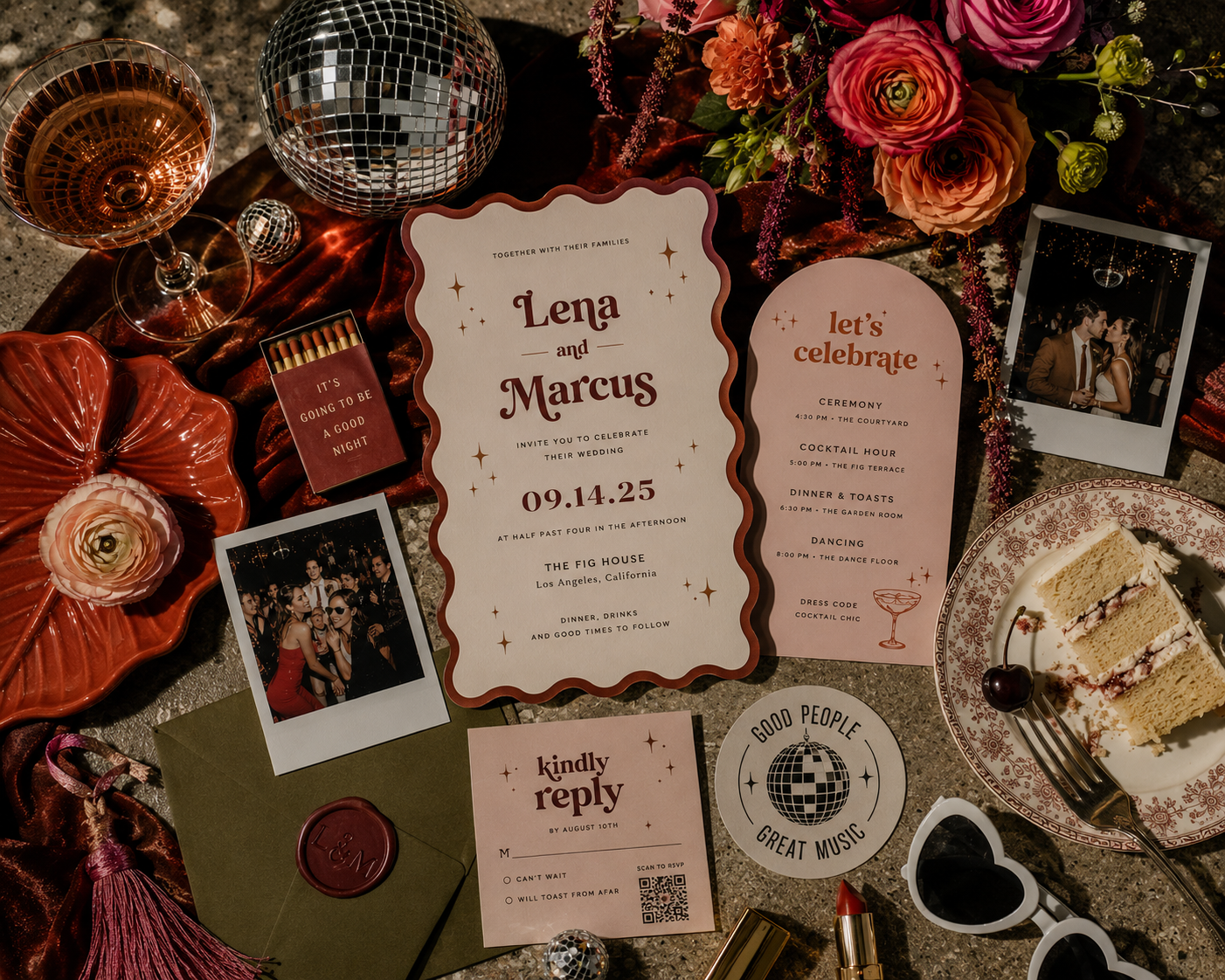
A strong wedding identity gives you a collection of visual ingredients to work with: typography, color, illustration, pattern, shape, texture and perhaps a few recurring motifs.
Then those ingredients can be interpreted differently throughout the celebration.
The illustration that dominates an invitation might appear only as a tiny detail on a menu. A pattern hidden inside an envelope might eventually cover an entire bar. A custom crest could appear formally on the invitation and later become something playful on a cocktail napkin.
Nothing has to look identical.
It simply has to feel like it belongs to the same world.
When Paper Became Part of the Room
This is where the meaning of "wedding stationery" starts getting a little blurry.
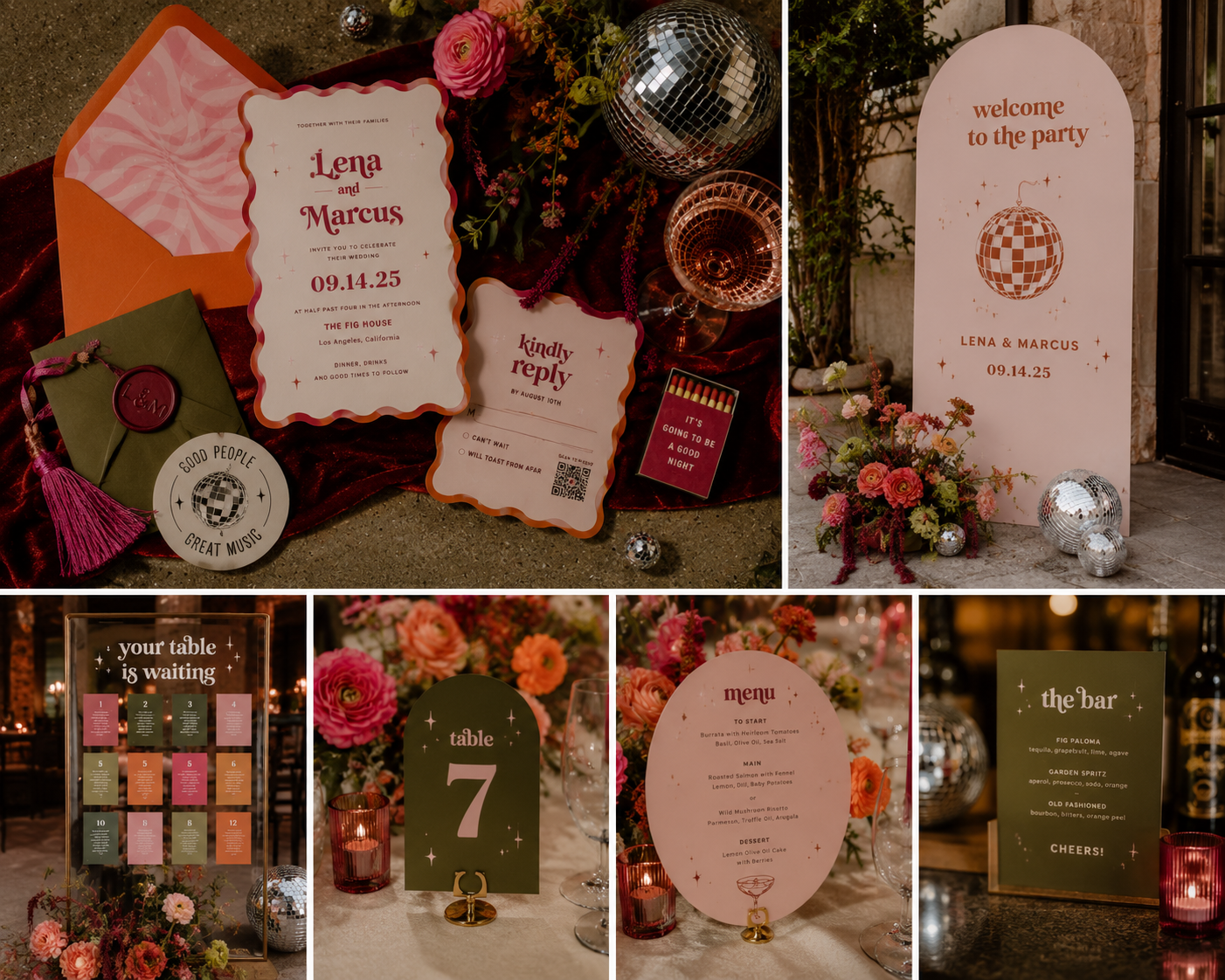
A seating chart can now be an installation. A bar menu can be printed on a mirror. Escort cards might hang from a wall, sit inside fruit, attach to champagne glasses or become part of a floral display.
Something that began as a five-by-seven-inch invitation can eventually become six feet tall.
And that's an interesting shift.
Stationery isn't necessarily something guests simply read anymore. It's becoming part of the physical environment they're walking through.
A graphic introduced months earlier on an invitation might suddenly appear behind the bar. A color used sparingly in the stationery can dominate a seating installation. Typography becomes signage. Illustration becomes decor.
The graphic identity has escaped the page.
The Table Is Where Guests Actually Touch the Design
Once guests sit down, the experience becomes much more tactile.
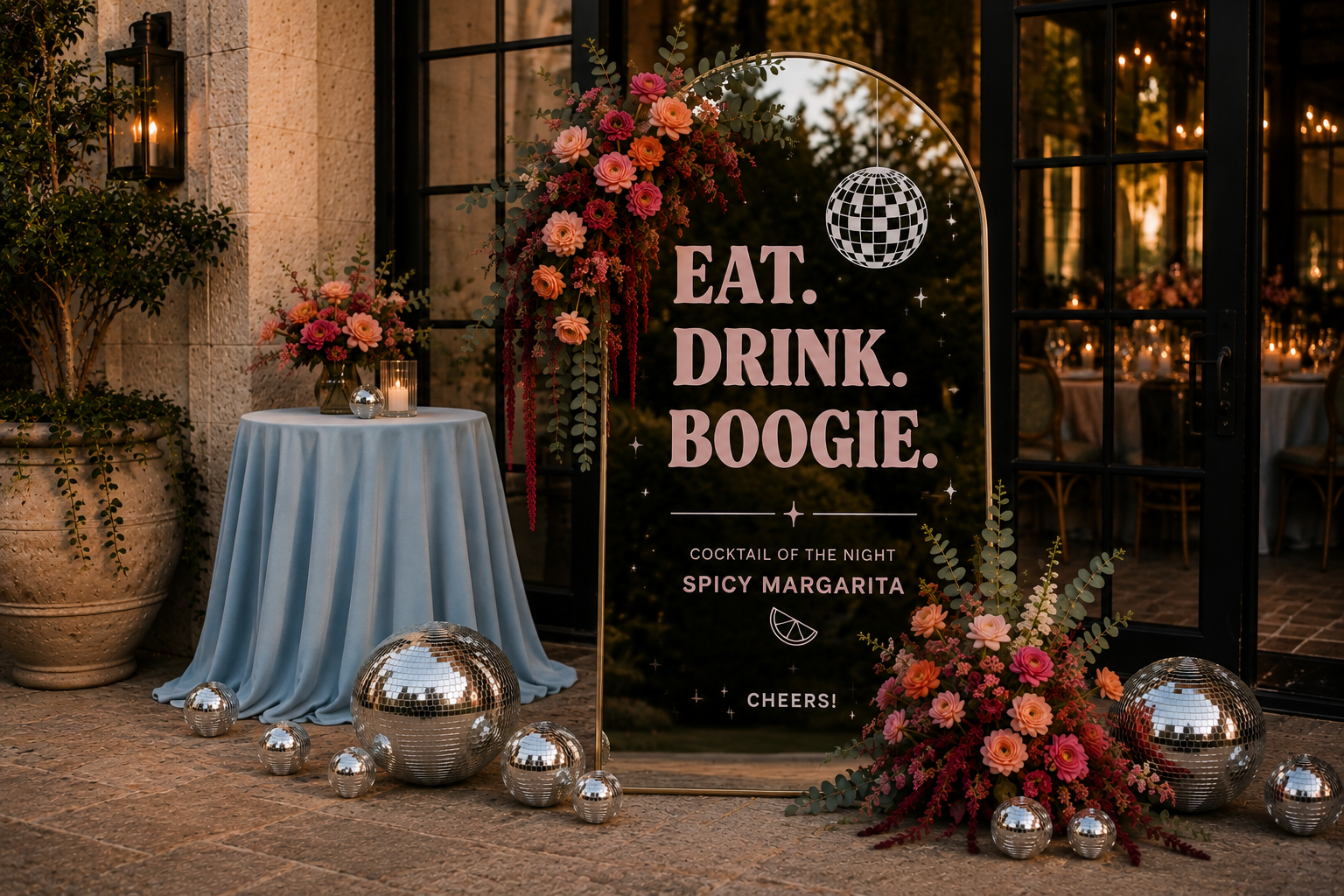
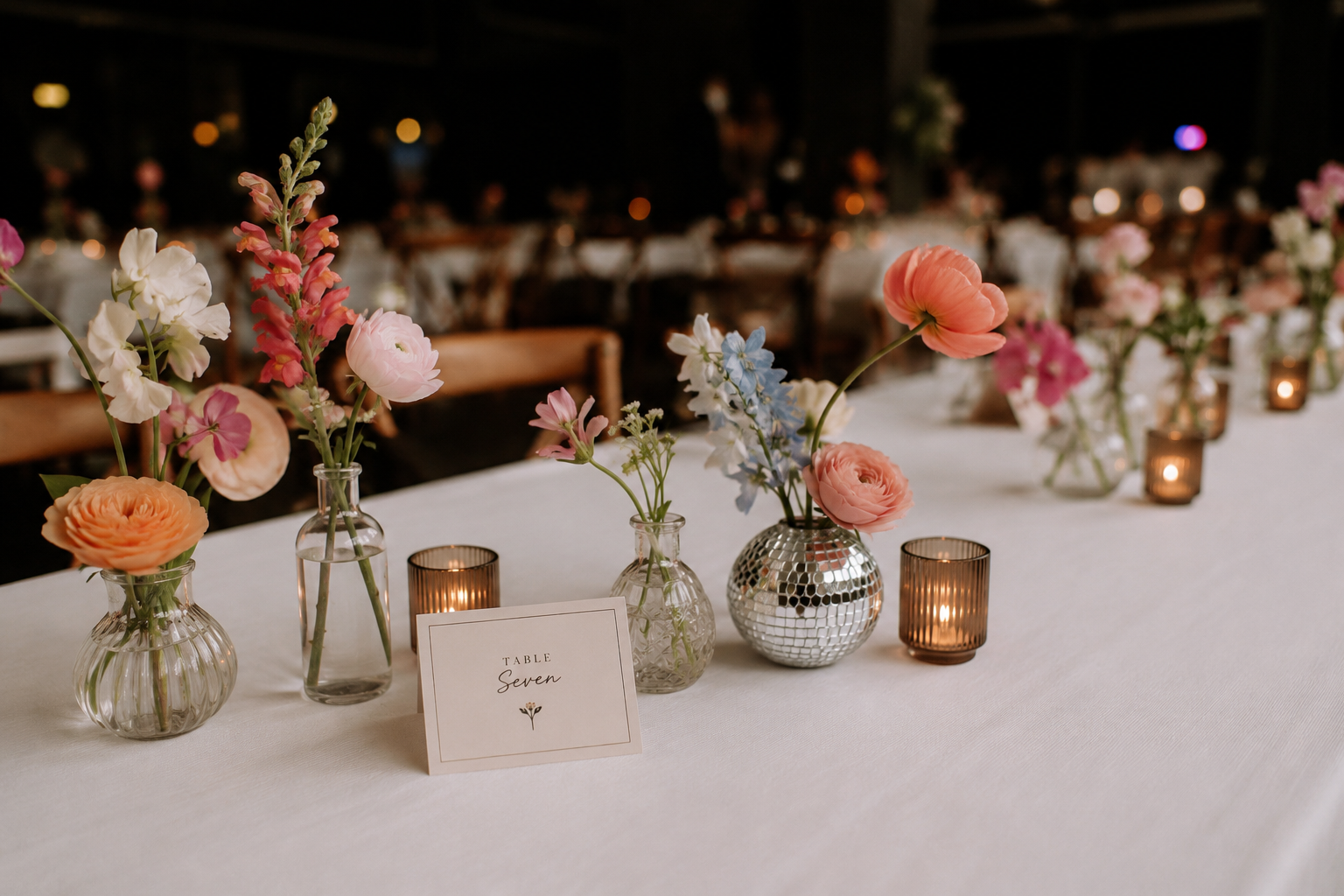
They pick up the menu. They find their name. They turn over a place card. They read a little note. They notice the table number sitting among the flowers.
This is where stationery stops being something guests looked at months ago and becomes something they're physically interacting with.
And menus in particular have become much more interesting.
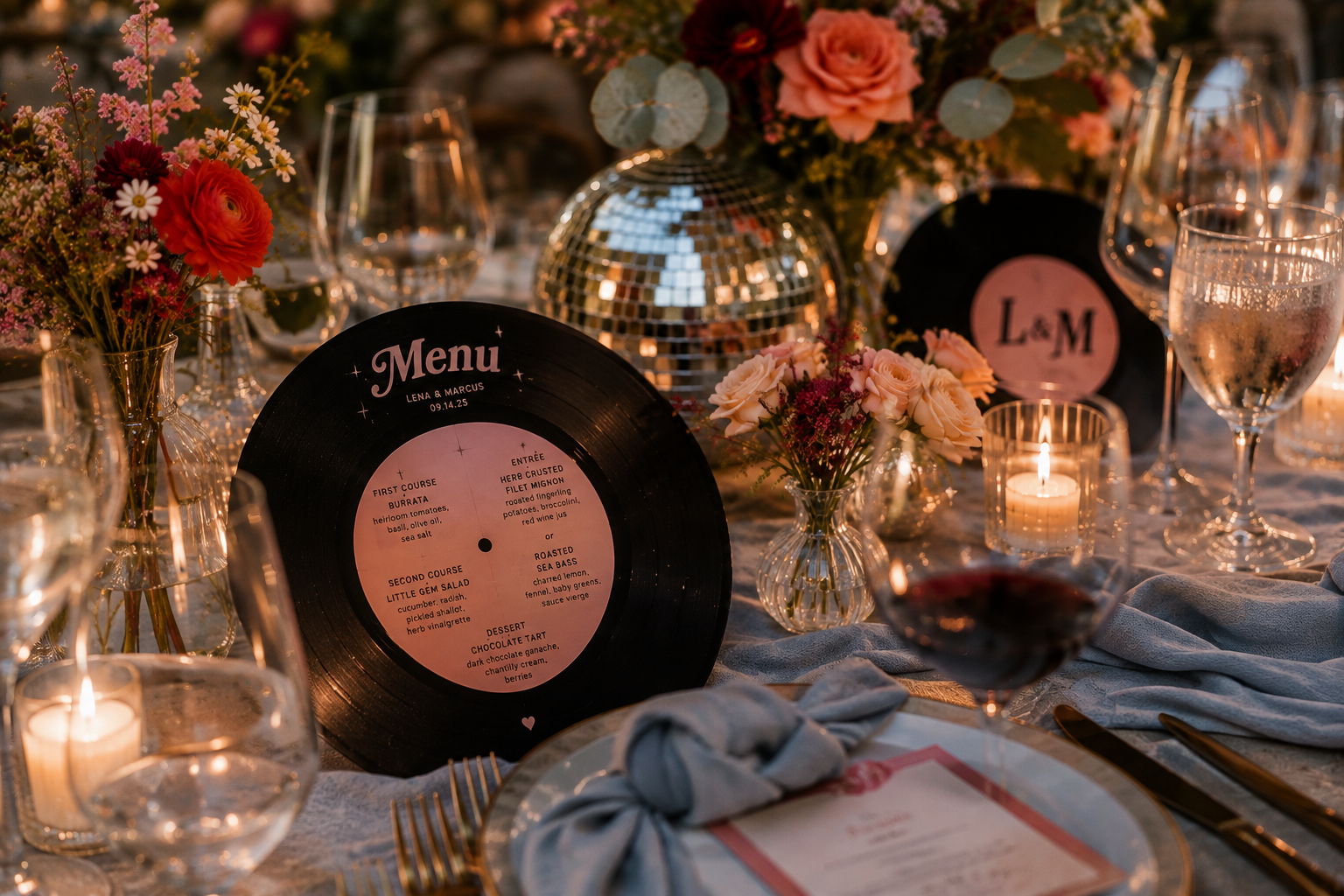
They don't have to be rectangular pieces of cardstock that resemble miniature invitations anymore. They can be circles, records, folded pieces, die-cut shapes or objects integrated directly into the tablescape.
The menu still has a job to do.
It just gets to have a personality while doing it.
Everything Is Starting to Talk to Everything Else
This might be the part of current wedding design that I find most interesting.
The boundaries between categories are disappearing.
Fashion is influencing cake design. Interior design is influencing tablescapes. Architecture is becoming illustration. Florals are becoming patterns. A vintage object can inspire an entire graphic direction.
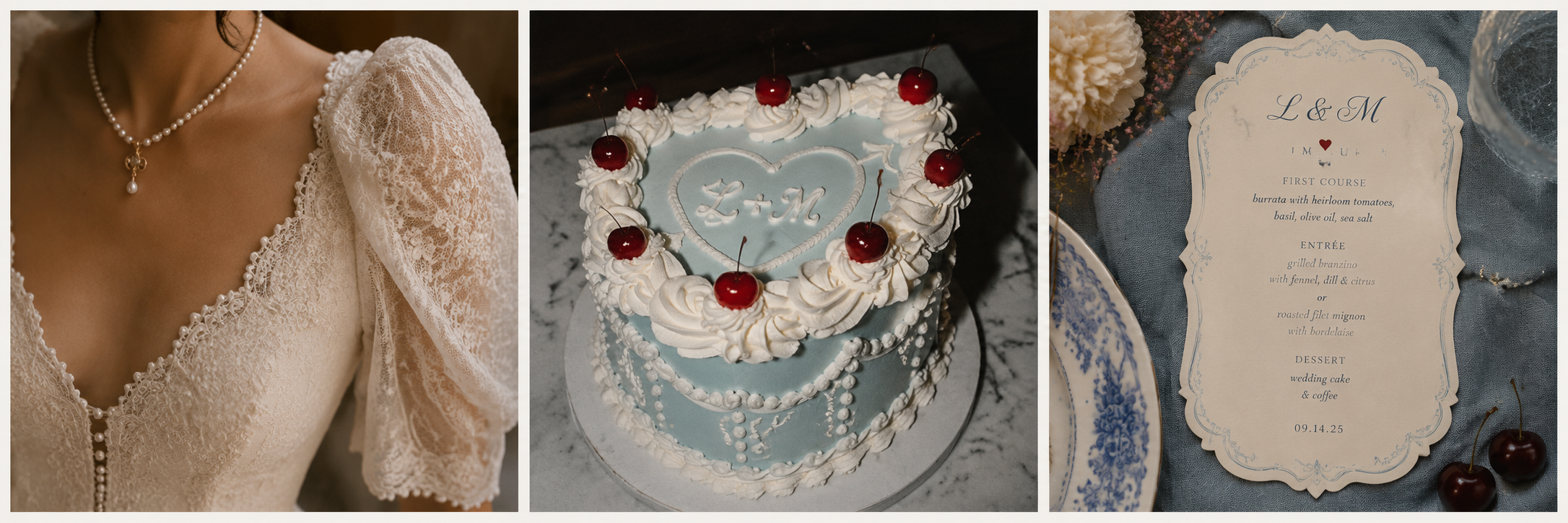
One trend I'm particularly fascinated by for 2027 is wedding cakes borrowing details directly from bridal fashion.
Lace becomes piping.
Pearls become confectionery details.
Fabric draping becomes icing.
Bows, ruffles and embroidery move from the dress to the cake.
But there's no reason that conversation has to stop there.
The scallop of a neckline could inspire the edge of a menu. Lace could become a blind embossed detail on an invitation. A bow could become a tiny illustration on a cocktail napkin.
The strongest weddings aren't necessarily built around a "theme."
Sometimes they're built around a collection of ideas that keep talking to one another.
Color Doesn't Have to Behave
Wedding palettes used to feel very prescribed.
Choose three colors. Apply those three colors throughout the wedding. Make sure everything coordinates.
But color becomes much more interesting when different colors are allowed to play different roles.
A palette I recently came across for winter pairs Redwood, Powder Blue and Cloud Dancer.
It's unexpected enough to feel fresh while still making perfect sense for the season.
Cloud Dancer creates the quiet foundation. Powder Blue brings in that icy winter softness. Redwood adds depth and warmth.
But the interesting part isn't simply putting all three colors on an invitation.
Maybe the stationery is predominantly Cloud Dancer.
Powder Blue appears on the cake and bridesmaid dresses.
Redwood comes through in florals, typography, ribbon or tiny details.
The colors don't need equal billing.
They just need to belong to the same conversation.

Personality Is Replacing Perfection
For years, luxury wedding imagery was incredibly polished.
Perfect stationery flat lays. Perfect place settings. Perfectly arranged details photographed before anyone touched them.
Those photographs are still beautiful.
But there's something much more interesting happening alongside them.
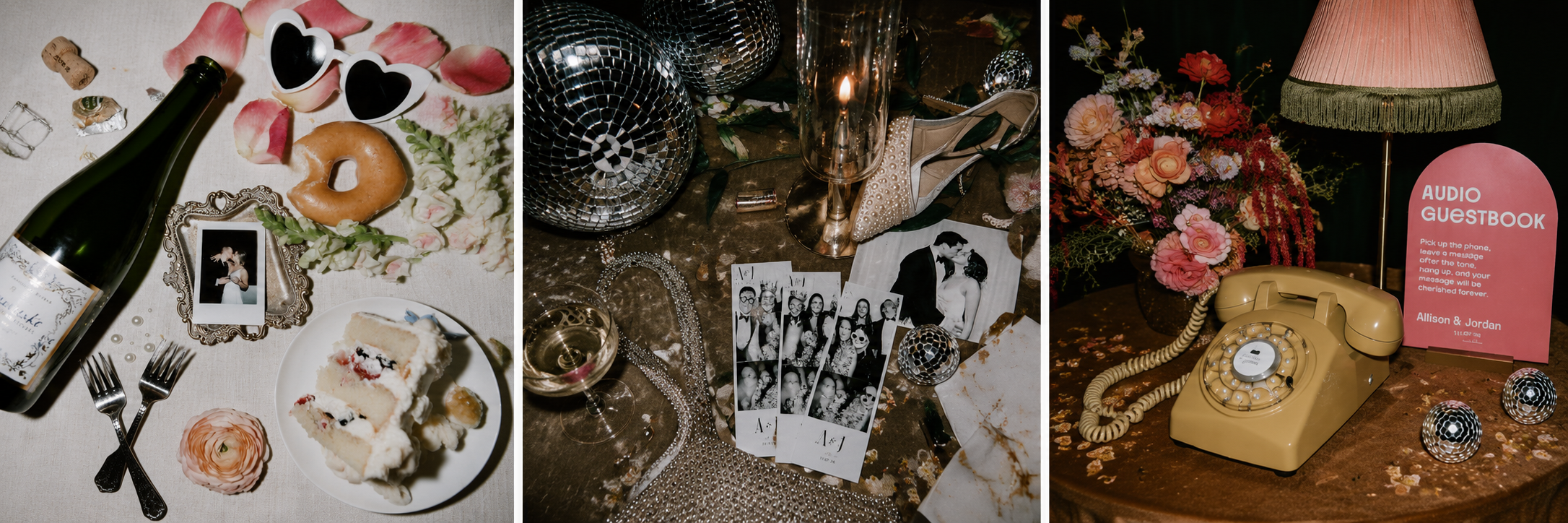
A champagne bottle left on the table. Half-eaten cake. Sunglasses abandoned beside a place setting. Photobooth strips scattered among the flowers. A guestbook full of handwriting.
Evidence that people were actually there.
And wedding design is becoming more comfortable with that personality too.
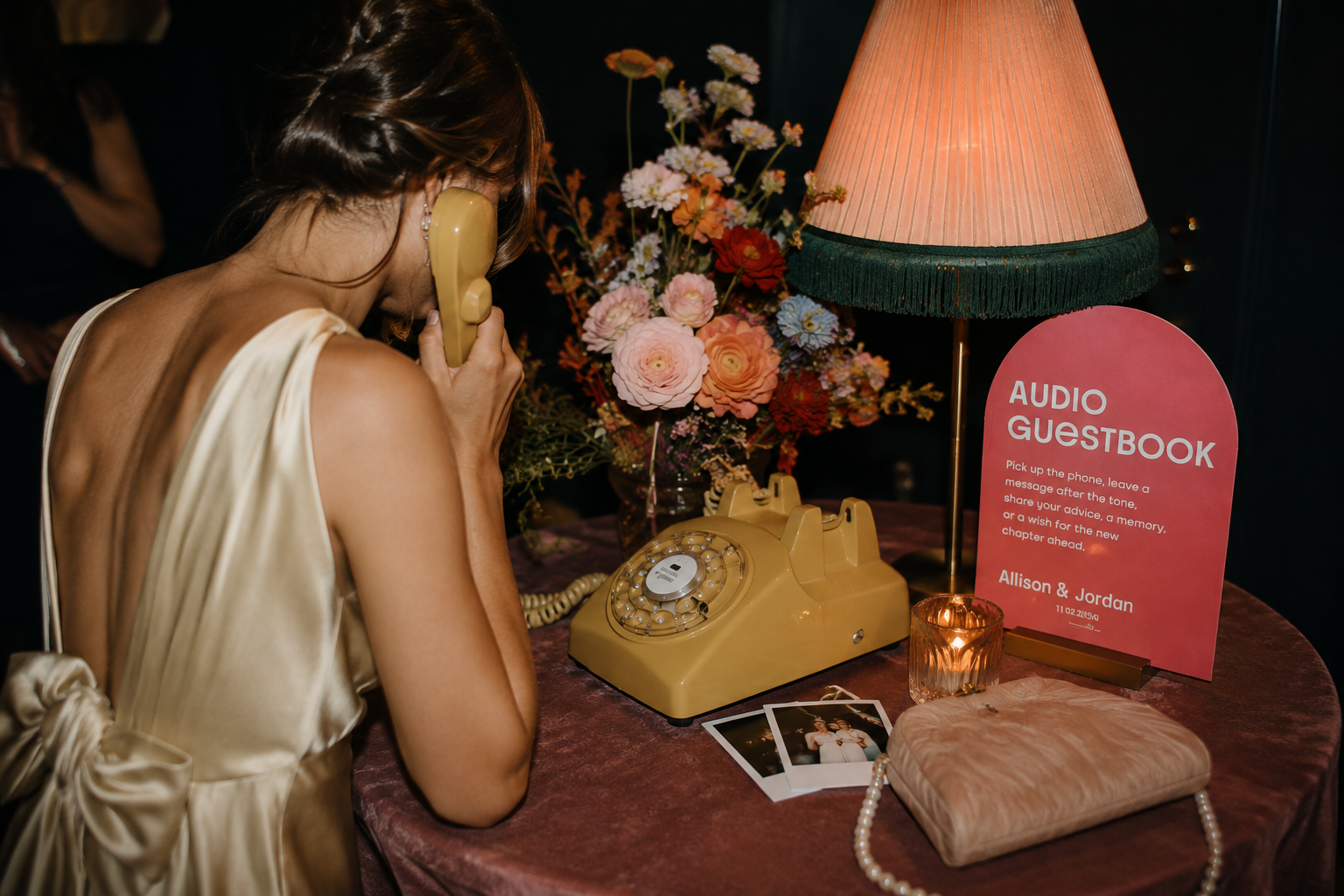
A cheeky phrase on a bar sign. An old telephone used as an audio guestbook. A menu designed like a record. Matchbooks, postcards, illustrations, photographs and tiny inside jokes.
Personalization doesn't necessarily mean putting the couple's initials on everything.
Sometimes it means creating a wedding that couldn't possibly belong to anyone else.
Guests Notice More Than We Think
Most guests aren't going to consciously analyze any of this.
They're probably not going to compliment the consistent typographic hierarchy across the event.
At least I hope they're not.
But they notice how a wedding feels.
They notice something interesting while they're looking for their seat.
They pick up an unusual menu.
They take a picture in front of the seating display.
They leave a message on an old telephone.
They recognize the illustration from the invitation they received months earlier.
They tuck a place card into their purse because it's too pretty to leave behind.
Individually, these are tiny moments.
Together, they're part of the experience.
Cohesion Doesn't Mean More
There is one important caveat to all of this.
Just because we can put a custom crest on the invitation, menu, napkin, bar, dance floor, welcome sign, seating chart and favor doesn't mean we should.
Good visual identities need quieter moments.
If the seating installation is dramatic, maybe the place cards are simple.
If the invitation is covered in illustration, perhaps the menu is mostly typography.
If there's a bold pattern behind the bar, the cocktail napkin might need nothing more than one tiny symbol.
The goal isn't to make guests notice how many things were designed.
The goal is to make the entire celebration feel considered.
Beyond the Invitation
Maybe "wedding stationery" isn't even a big enough phrase anymore.
Because we're designing things guests read, but we're also designing things they hold, discover, photograph, interact with and sometimes take home.
The invitation still matters.
In many ways, it matters more than ever.
It's simply no longer the entire story.
It's the first glimpse.
A color introduced there can eventually appear on the cake. An illustration can become an installation. A detail from the bride's dress can inspire a menu. A map can help guests experience a destination. A tiny graphic can reappear somewhere completely unexpected.
And slowly, those individual pieces build something much larger.
Not a perfectly matching wedding.
A wedding that feels like it belongs to the people at the center of it.